

What is Aloe macroclada (Vahona)?
It is a Malagasy medicinal plant, known for its richness in bioactive polysaccharides. Traditionally used to support regeneration, it is now being studied for its role in cell communication.
🌿 TL;DR – The Forgotten Power of the Vahona
When cell biology experts study Vahona , a medicinal plant from Madagascar, they confirm what tradition already knew:
💡 Nicknamed “the plant with a thousand virtues” , it awakens a forgotten signal — that of natural regeneration , by rapidly mobilizing stem cells , key players in cellular repair and lasting vitality .
👉 This article explains how.
⏱ Reading time: minutes
Aloe macroclada (Vahona): Stem Cell Activation & Cellular Longevity
What if regeneration didn't depend on a miracle cure, but on a biological signal that the body can recognize? In Madagascar, tradition has an answer: Vahona. Modern science calls it Aloe macroclada—and is beginning to explore its potential with precise measuring tools.
What interests researchers today is specific: its ability to influence cell communication and stem cell mobilization , two central mechanisms of regeneration.
Why Aloe macroclada is attracting scientific attention
Aloe macroclada grows in an arid area of southern Madagascar. To survive, it has developed a high concentration of polysaccharides .
Polysaccharides : molecules capable of interacting with receptors involved in immunity, inflammation, and cell repair.
The published analyses indicate a content of between 20 and 27% of bioactive polysaccharides .

Cell communication and stem cells: the key link
🔬 What are stem cells used for?
These are the "reserve" cells of our body. They can transform into other cells to repair damaged tissues (skin, muscle, etc.).
📡 But they still need to know where to go…
To act, stem cells await a **biological signal**. This signal is sent by cells around the area to be repaired. This is called cell communication .

🔬 Caption – How Aloe macroclada influences cell mobilization:
1. Bone marrow – Natural site of production of hematopoietic stem cells (CD34+).
A. Biological signal sent by Aloe macroclada: activation of cell communication.
2. CD34+ stem cell – Capable of becoming several types of blood cells.
3. Red blood cells – Transport oxygen throughout the body.
4. Platelets – Play a role in coagulation and tissue repair.
5. White blood cells – Players in immunity.
B. Differentiation – Cells migrate and transform according to the body's needs.
💡 Aloe macroclada does not create these cells, but sends a signal allowing their measurable release.
🌿 The role of Aloe macroclada
This plant contains bioactive polysaccharides — natural compounds that help to “talk” to stem cells. As a result, they receive the right signal… and get moving.
What happens after taking Vahona?
A human study has shown that in less than 2 hours, the body begins to release more stem cells into the circulation.
These cells, called CD34+, are like natural “repairers”: they can transform into useful cells where the body needs them.
In short, Vahona sends a signal : it reminds the body to do what it already knows how to do → repair, regenerate, adapt.
In the laboratory, a calming of certain inflammatory markers is also observed, as if the plant helped to communicate better within the body.
It's not a magic promise. It's a biological, measurable, and natural boost .

Vahona acts as a biological signal , triggering a rapid response from the body.
This graph illustrates the measured increase in CD34+ cells in the hours following consumption.
The figures observed
- +53% increase in circulating CD34+ stem cells after ingestion (human study, Dr. C. Drapeau, 2015)
- Mobilization observed in less than 2 hours
- In vitro data (NIS Labs, 2025) showing a modulation of the immune response
These figures do not indicate a cure, but a measurable activation of natural repair mechanisms .
🩸 Useful clarification: what happens to CD34+?
CD34+ stem cells cannot become just any cell in the body.
➤ These are hematopoietic stem cells , meaning that they give rise to blood and immune system cells: red blood cells (oxygen), white blood cells (defense), platelets (coagulation).
👉 By mobilizing them, the body improves its indirect tissue repair capabilities: better oxygenation, finer inflammatory response, facilitated regeneration.
🔬 Biological Benefits of Aloe macroclada

Stem cell mobilization
Stimulates CD34+ cells involved in tissue repair.

Anti-inflammatory effect
Natural reduction of cytokines and the NF-κB pathway.

Mitochondrial protection
Less oxidative stress, more available energy.

Microcirculation
Promotes tissue oxygenation and perfusion.

Immune support
Balances innate and adaptive responses.
Why the capsule shape is crucial

Polysaccharides are susceptible to oxidation and digestion.
- Protection of active compounds
- Gradual release
- Reproducible and precise dose
Each capsule acts as a clear signal sent to the cellular system.
Conclusion: your biology already knows
What if the answer came not from a miracle supplement, but from a forgotten biological signal ? Aloe macroclada, this plant with a thousand virtues, awakens this internal dialogue between cells, inflammation and repair.
Its effectiveness is not a spectacular promise: it is based on measurable clinical and biological data – activation of CD34+ cells, improved immune response, and optimized tissue circulation.
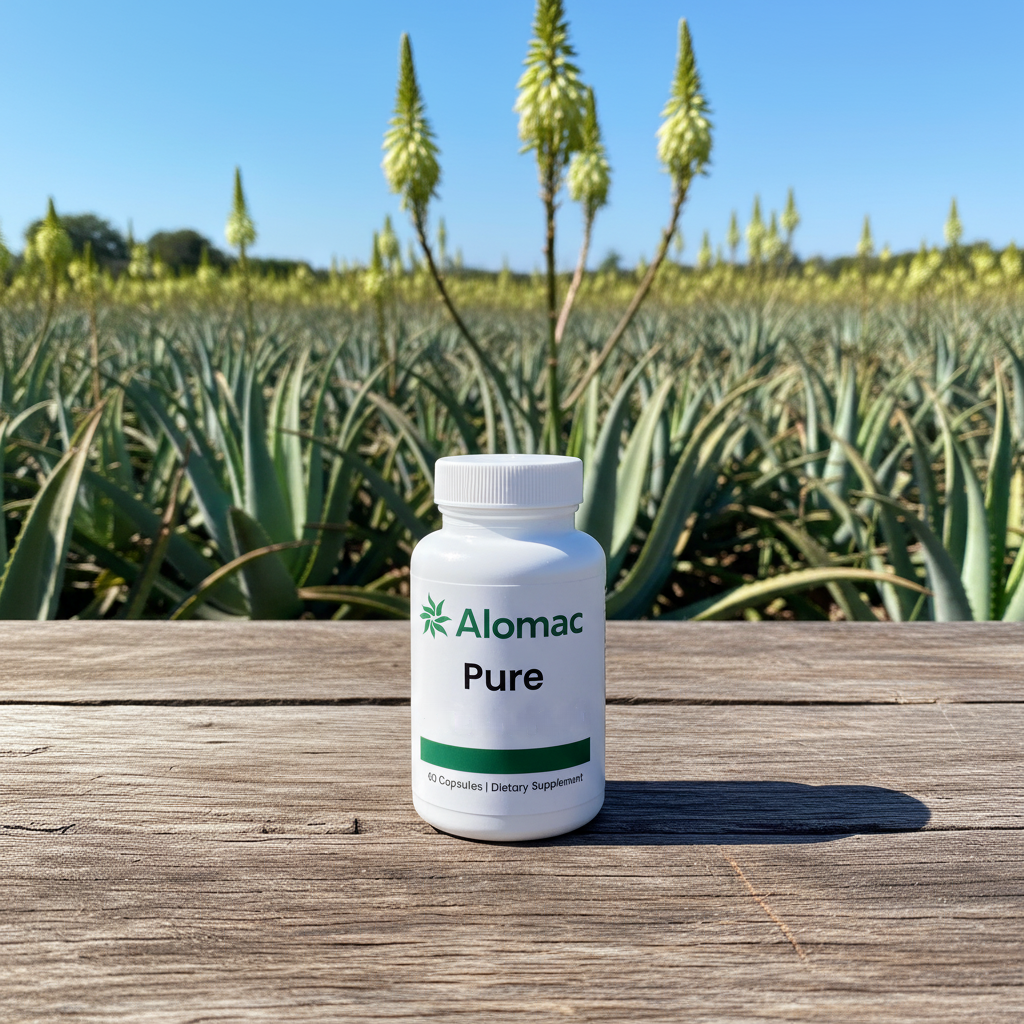
🌿 Vahona, in capsule format, then becomes more than a product: a precise, dosed, natural signal… so that your body can do what it already knows how to do: repair itself, balance itself, strengthen itself.
🎯 Try Vahona today
Aloe macroclada capsules: a stable formulation, designed to trigger your natural cellular response.
✧ Support for regeneration
✧ Activation of stem cells
✧ Anti-inflammatory and oxidative protection
And if you are still hesitating between Vahona and other supplements, discover what science says in our 2025 comparison with classic supplements .
🔍 Frequently Asked Questions about Vahona (Aloe macroclada)
1 Is Aloe macroclada scientifically backed?
Yes. Human and in vitro studies show a measurable increase in circulating CD34+ stem cells, and modulation of inflammatory and immune markers. See links at the end of the article.
2 How long before I feel or see any effect?
Some users report biological effects (e.g. better recovery, improved focus or energy) in as little as 2 hours. However, most protocols study daily use over 30 to 90 days.
3 Can I take Vahona every day?
Yes. Daily supplementation is safe and studied in scientific protocols. A typical course lasts 30 to 90 days depending on your wellness goals.
4 How is Vahona different from Aloe vera?
Vahona (Aloe macroclada) contains a higher level of active polysaccharides and has shown different effects on cell communication and immune modulation in labs.
For a full breakdown, read our comparison article.

Scientific sources
- Drapeau C. et al. Effect of endogenous stem cell mobilization on human physiology . Human study – transient increase in circulating stem cells (~53%). 2015. Read the study
- NIS Labs. Immune Activation and Modulation of Inflammation In Vitro . In vitro study – modulation of immune and inflammatory markers. 2025. Access the document
- NIS Labs. Immune Modulation – Summary Report . Further analysis of cellular effects observed in the laboratory. 2025. See the summary

1 comment
Please put me on your mailing list.
Thanks, Mark